
Opinion: Rethinking global health funding for the good of all
By Githinji Gitahi, Camilla Knox-Pebbles The United Kingdom is no longer a development superpower — as demonstrated by its own action and admission. In 2020, it cut its aid budget from 0.7% of gross national income to 0.5%, which meant £4.5 billion less committed to supporting the world’s poorest people. Two further rounds of cuts to account for refugee hosting costs in the U.K., and reduced pledges for the Global Fund to Fight AIDS, Tuberculosis and Malaria and other global health initiatives further eroded its status. And the U.K. is not alone in this: overseas aid budgets of other high-income countries are following similar trends. This has a direct impact on the ability of global health funding initiatives and development organizations to deliver essential health services. Although African nations responded to the call to increase Global Fund pledges, they are faced with their own domestic health financing challenges. African governments continue to struggle to achieve the 15% allocation of their national budgets to health, as outlined by the 2001 Abuja Declaration. And even if they did, with low economic power and low tax efficiencies, this allocation would hardly be adequate. Rather than view it as charity, development assistance should be viewed as a strategic investment aimed at … the global good.— Between dwindling domestic budgets and reduced donor government funding, Africa’s $66 billion annual health funding gap is only set to widen. This means that many people living on the continent are losing their right to health — and their lives. Conflict, poverty, food insecurity, and climate change all act as barriers to closing the gap, yet a healthy Africa would contribute to a healthier world, as proven by the COVID-19 pandemic, which has shown how interlinked our health is across the globe. If we are to address that funding gap, we need to rethink global health and development financing. Stronger systems, structures, and policies The calls for increased and more targeted funding for key health programs in low- and middle-income countries are heartening. However, for global development funding to evolve and guarantee health security for all, we need stronger systems, structures, and policies that will optimize the collection and deployment of funds from donors and ensure funds are used for their intended purposes. In parallel, African governments must be intentional about domestic resource mobilization and resource allocation and utilization. Together, domestic policy reforms combined with donor financing reforms that empower poorer nations to strengthen their health systems can help break the cycle of dependency on development aid. All contribute, all benefit, and all decide Moreover, we require a shift in mindset that will change the way we perceive development financing. Rather than view it as a charity, development assistance should be viewed as a strategic investment aimed at addressing the biggest social, economic, and environmental challenges in low-, middle-, and high-income countries alike — for the global good. This idea, put forward by the Global Public Investment network launched at the United Nations General Assembly in September last year, aims to inspire the world to move away from the “old-fashioned aid mentality” toward a common framework based on the principles of “all contribute, all benefit, and all decide.” It’s a bold idea. Not just for its clear stance on the inability of current international finance mechanisms to meet the challenges of climate change, disease outbreaks, and conflict, but for its desire to uphold the ideals of equity and inclusion in global health and development — both of which have long been elusive for recipients of development assistance. Having lost over 6.8 million lives to the COVID-19 pandemic, we know all too well the cost of failing to invest in the right resources to protect the world before and during times of crisis. Knowing what we stand to lose should we fail to act, we must move with haste to restructure global health and development financing to fulfil the expectations of countries and to meet populations at their points of need. These conversations will be front and centre at the upcoming Africa Health Agenda International Conference on March 5-8 in Kigali. The conference is convened by Amref Health Africa, the Government of Rwanda, and the Africa Centres for Disease Control and Prevention, and it is a platform for us to rethink global health funding for the good of all. The views in this opinion piece do not necessarily reflect Devex’s editorial views. About the authors Githinji Gitahi Dr. Githinji Gitahi is the group chief executive officer of Amref Health Africa, the largest Africa-led international organization, reaching more than 11 million people each year through 150 health-focused projects across 35 countries. Previously, Dr. Githinji was vice president and Africa regional director for Smile Train International; managing director for Monitor Publications in Uganda; and general manager for marketing and circulation in East Africa for the Nation Media Group. Dr. Githinji also sits on the boards of the Africa Centres for Disease Control and Prevention and The Coalition for Epidemic Preparedness Innovations. Camilla Knox-Pebbles Camilla Knox-Peebles has been the chief executive of Amref Health Africa UK since 2019. She has 25 years of experience in the humanitarian and international development sectors. Prior to joining Amref, she worked for Oxfam where she led the organization’s disaster response and oversaw its work on water and sanitation, public health and resilience building. She is an expert in public health and food security and has a particular interest in the intersection between health and climate change Article first published on https://www.devex.com/news/sponsored/opinion-rethinking-global-health-funding-for-the-good-of-all-104999
“We have to move quickly to strengthen fragile health systems,” says Amref director
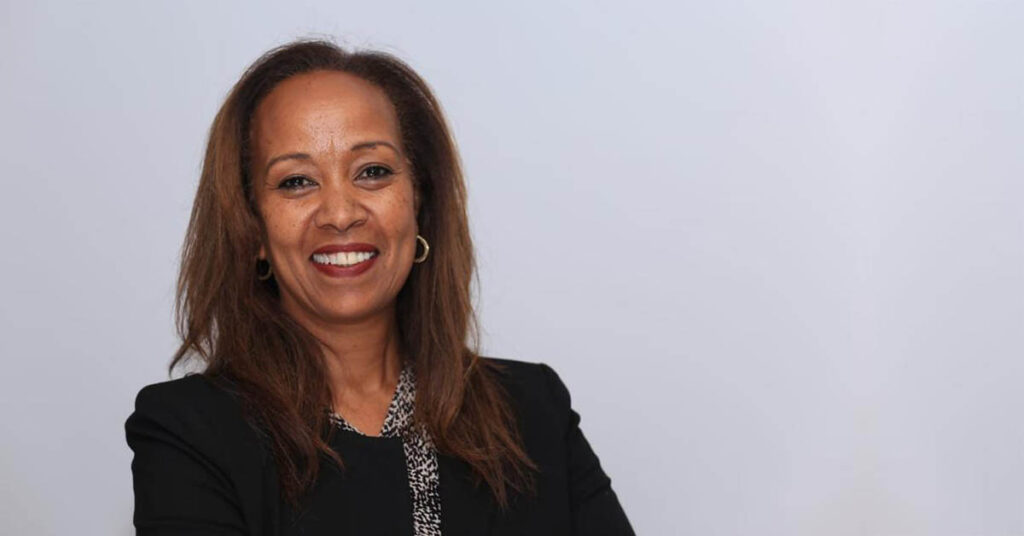
At #AHAIC2023, Africa’s leaders will talk about climate change and how to build resilient health systems. Amref Health Africa’s Desta Lakew talks about the key issues. There is an undeniable link between health and climate change, and Africa is especially vulnerable. For example, coastal waters have become more suitable for the transmission of Vibrio pathogens, according to the 2022 Lancet Countdown on health and climate change. The report compares the period of 2012 to 2021 with a similar span a half century earlier: 1951 to 1960. Researchers found that the number of months suitable for malaria transmission increased by 13·8% in the highland areas of Africa, while the likelihood of dengue transmission increased by 12%. More recently, the COVID-19 pandemic precipitated decline of already struggling health systems. Recently, I spoke with one of our Amref colleagues about the correlations between climate change and health. Desta Lakew is Group Partnership and External Affairs Director for Amref Health Africa — which is leading the upcoming Africa Health Agenda International Conference (AHAIC) in Kigali, Rwanda, from March 5 to 8. The theme for this year’s AHAIC is “Resilient Health Systems for Africa: Re-envisioning the Future Now.” What are the major challenges you see facing healthcare systems in Africa? Africa’s health systems face a myriad of challenges. These include longstanding ones such as inadequate infrastructure and financing, insufficient health workforce and a high infectious and non-communicable disease burden, as well as the more recent climate-related health crises like rising food insecurity, frequent outbreaks of diseases such as malaria, monkeypox and Ebola and limited access to clean water and sanitation. Since we held the first AHAIC in 2014, we have seen a significant increase in the number of climate and health emergencies recorded on the continent and survived a global pandemic that threatened to completely decimate our fragile health systems. In that time we have also seen the establishment of the African Medicines Agency (AMA), the achievement of autonomy for the African Centres of Disease Control and Prevention (Africa CDC), capacity building for vaccine manufacturing in Africa and growing regional cooperation, all of which point to our potential to surmount these challenges — no matter how daunting they seem. Are there major steps forwards that you’d like to see actualized in the near future, for building resilient healthcare systems in Africa? The past few years have shown us that strong and resilient health systems are critical for our continent to ensure equitable access to health for our people. This year’s conference theme is a call to action to guide what we feel needs to be done to move united in our purpose to strengthen Africa’s health systems and ready ourselves for the future now. Perhaps one of the crucial steps towards achieving this is strengthening regional cooperation and speaking in one voice. We need to leverage our diversity and strengths to come up with sustainable, inclusive, equitable health policies for Africa by Africa while at the same time acknowledging that we have no time to waste if we are to recalibrate the course of climate change and health on the continent. It is time for us to move beyond the same rhetoric we have heard for the past few years and commit to action. The conference program is an ambitious one. What are you most looking forward to discussing at AHAIC 2023? We are very excited about all of the conversations that will be taking place. However, what makes me super excited is an area that we have not seen adequately addressed, which is the intersection of climate change and health. This is such a critical and timely issue for us, and based on our experience and the ominous projections of the impact of climate change in Africa’s health outcomes, this could not have come at a more important time. We have to move quickly to strengthen fragile health systems through greater regional and global cooperation, scaling up health financing in the midst of economic crises, bridging the global north-south divide, building a fit-for-purpose African health workforce, and tapping into the power of communities to drive innovation and solidify ownership of Africa’s health agenda. Amref has long been a champion of enhanced regional cooperation, and this conference offers us — and our partners — a platform to bring Africa’s leaders across all levels to find a means to achieving the goal of a united, prosperous, healthy continent. We are also very excited to be the first global health conference held in Africa that is seeking to mainstream climate into health talks and vice versa. With mounting evidence on the strong linkages between the two, we believe that the only way to tackle these intertwined challenges is to address them together, and AHAIC will be the first convening of its kind to focus on climate change as a key determinant of health. Is there a call to action — or hope for the future — you’d like to share with readers? There is the saying that “insanity is doing the same thing over and over and expecting different results.” My call to action is that we as leaders of this continent, advocates for our people, re-think how we work in partnership and across sectors to own our narrative, leverage opportunities for collective action and ensure that we work find tangible solutions for improving the health of our continent. This means alignment, prioritization and responsible investment in our health systems. Everyone can use their voices and platforms to bring attention to the issues that truly matter — the collective health and wellbeing of both people and planet being one of them — and to actively participate in discourse and action that will bring us closer to creating the world we want for ourselves and future generations.