
Climate Change to Take Centre Stage at Africa Health Agenda International Conference (AHAIC) in March 2023
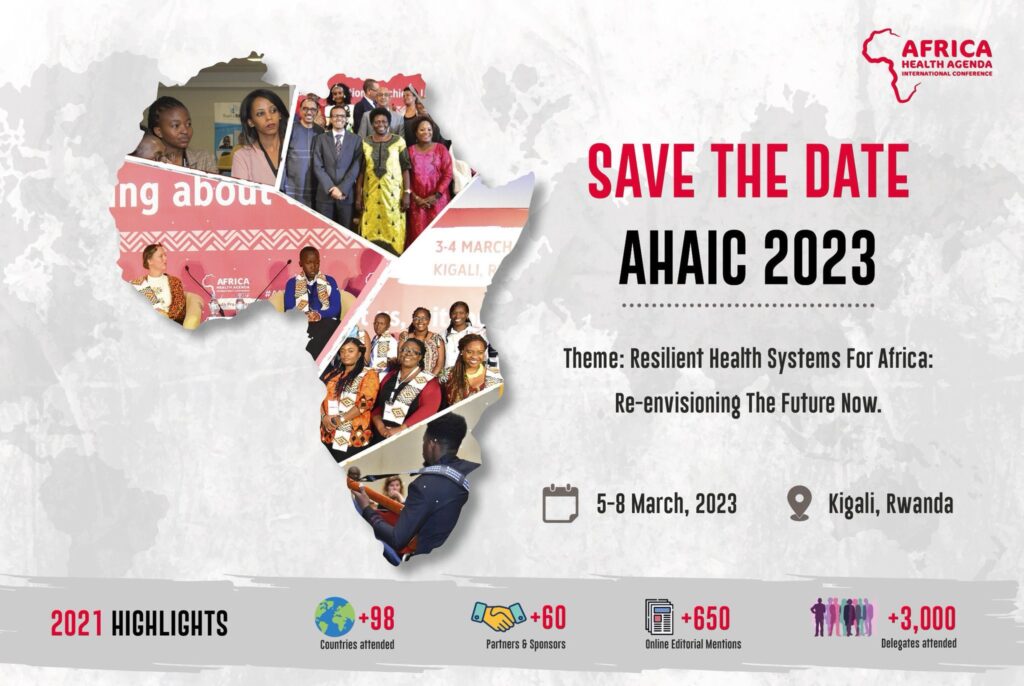
Political leaders, policy makers, civil society, health, and climate leaders convene in Kigali, Rwanda, to discuss health policies for Africa against backdrop of global challenges, including climate change, food insecurity, conflict and economic recession. 7th February 2023, Nairobi, Kenya: Stakeholders in health and development from all over the world will, from 5-8 March, assemble in Kigali, Rwanda, for the fifth edition of The Africa Health Agenda International Conference (AHAIC) 2023, whose theme is “Resilient Health Systems for Africa: Re-envisioning the Future Now”. Jointly convened by Amref Health Africa, Ministry of Health Rwanda, African Union and Africa Centres for Disease Control and Prevention (Africa CDC), the biennial conference will bring together the continent’s top thought leaders, political figures, innovators, researchers, policy makers and civil society for dialogue and action aimed at mainstreaming climate discourse into health policy conversations and vice versa. “This will be the first time that a global health conference in Africa focuses on climate change as a key determinant of health. We know that climate change and health are intrinsically intertwined, yet they have for decades now been treated as two separate issues,” said Dr Githinji Gitahi, Group CEO, Amref Health Africa. “At AHAIC 2023, we will be exploring themes at the nexus of climate change and health including a rapidly warming planet, pandemic preparedness, food security and nutrition, innovation, research and development, gender, and conflict.” AHAIC 2023 comes against the backdrop of renewed calls by African leaders for more urgent action against climate change as its impacts continue to be acutely felt on the continent. At the heart of the conference will be sessions curated to find sustainable and inclusive solutions to Africa’s most pressing climate change and health challenges. “African nations remain particularly vulnerable to the effects of climate change. We are already feeling the effects of deteriorating global health through extreme weather events and food insecurity, limited access to clean water, and frequent epidemics. Yet these issues remain on the periphery of climate conversations despite the existence of scientific evidence that climate change threatens our well-being,” said Dr Sabin Nsanzimana, Minister of Health, Rwanda. As the world inches closer to the 2030 Sustainable Development Goals deadline, African leaders at the conference will be urging the global community to renew its commitments to end poverty and improve health and wellbeing while at the same time protecting the planet. With a youthful population of 1.2 billion people likely to bear the brunt of climate change, participants at the conference will also be advocating for more resources to be allocated to resolving the global health and climate crises as the world slowly emerges from the three-year grip of the COVID-19 pandemic. “While we remain cautiously optimistic about the world’s ability to prevent and withstand the next global pandemic, we must also be cognisant that we cannot survive what we do not prepare for. It is, therefore, imperative that we come together to find solutions to today’s and tomorrow’s challenges while we still have the opportunity. Together with Member States and partners such as Amref, the Africa CDC will continue to implement the New Public Health Order to drive Africa’s health security,” said Dr Ahmed Ogwell Ouma, Acting Director General, Africa CDC. AHAIC 2023 aims to shape a joint African position on climate and health ahead of critical conversations that will take place at the World Health Assembly, the 78th session of the United Nations General Assembly (UNGA 78), and the 28th session of the Conference of the Parties (COP 28) later in the year. The conference will kick off with the AHAIC 2023 Wogging event on 5th March to coincide with the Kigali Car Free Day, which takes place every first and third Sunday of the month as part of efforts to make Kigali a green city and to fight non-communicable diseases (NCDs). This will be followed by three days of plenaries, high level meetings, workshops and networking sessions that will take place from 6th to 8th March. ### Notes to Editors: About AHAIC The Africa Health Agenda International Conference (AHAIC) is a flagship convening of Amref Health Africa and is the largest health and development conference held in Africa every two years. Now in its fifth round, AHAIC 2023 will bring together the African community, world leaders, financiers, innovators, technologists, scientists, and experts across domains to discuss health policies for Africa in response to the most pressing challenges of our times – conflict, climate change, food insecurity and human rights violations. AHAIC 2023 puts people at the centre of all discussions and recognises the unique needs of the global south. We encourage minority populations, African nations and other low- and middle-income countries to get involved in re-shaping Africa’s health and development trajectory. Run by and for the people of Africa in Africa, AHAIC 2023 is designed to tackle complex issues in a practical manner and promises to be more challenging, innovative, and fun than other global health events. Additional Resources: To learn more about AHAIC 2023, please visit www.ahaic.org. You can also view the conference programme online at: https://ahaic.org/conference-programme/ Get real-time updates from the conference by following Amref Health Africa on Twitter | LinkedIn | Facebook | Instagram and via #AHAIC2023. Media Contacts: Erick Achola, Global Communications Manager, Amref Health Africa Erick.Achola@Amref.org Julien Niyingabira Mahoro, Rwanda Biomedical Centre/Ministry of Health Rwanda niyingabira@gmail.com or Magnifique Muhoza (Office of the Government Spokesperson) mmuhoza@ogs.gov.rw Liliane Bilogho Ndong Nang, Technical Officer Risk Communication and Community Engagement, Africa CDC Nangl@africa-union.org
Placing Women At The Centre Of Health Leadership In Africa Key To Achieving UHC

Author(s): Dr. Norah Obudho, Health Integration and East Africa Director, WomenLift Health; Dr. Florence Temu, Country Director, Amref Health Africa in Tanzania Over a decade ago, Pan African Parliament Women’s Conference President, Mavis Matladi of South Africa, declared that it was “more dangerous to be a woman than a soldier” in Africa. In that time much has changed, but at the same time, too much has remained the same. While women and girls now have more access to education and economic opportunities and are better represented in politics and other spheres of leadership, they remain the most vulnerable to impacts of disease outbreaks, fragile health systems, conflict, domestic abuse, economic instability, and climate change. African women and girls for example still account for about 66 percent of global maternal mortality rates and are twice as likely as boys to miss out on formal education. Additionally, approximately 63 percent of the world’s extremely poor women live in Sub-Saharan Africa, limiting their ability to access essential health services and pushing the continent further away from achieving its health targets. Much of this has been driven by sociocultural norms skewed towards enforcing patriarchal structures that have traditionally subdued women and denied them access to the same rights as men. The same structures have also perpetuated the gender inequities that keep women from attaining leadership positions, which are often assumed to be reserved for men despite the presence of numerous, qualified women on the continent. Consequently, decisions in health are frequently made without women’s input, even when the issues at hand directly affect them, as with maternal and reproductive health. While it would be unfair and simplistic to blame one gender for the loss of millions of lives due to infectious and non-communicable diseases, poor quality health services, and lack of access to essential care, there is a direct correlation between Africa’s health outcomes and its health leadership. Considering majority of positions in health leadership are occupied by men, and that nearly all decisions affecting the resilience and responsiveness of our health systems are made by men, one could then rightly say that Africa’s homogenous health leadership has been – and continues to be – a key determinant in the continent’s (in)ability to achieve health for all. Now, as we stand at the midway point of the Sustainable Development Goals 2030 target, it would benefit us to have candid conversations about leadership and the role it plays in either bringing us closer to the goals or taking us further away from them. The simple truth is that leadership that is not representative of the people it serves, be this across racial, gender, or socio-economic lines, will not and cannot address the challenges preventing us from ensuring the highest attainable level of health for all. We need to reimagine the face of health leadership if we are to rebuild our health systems and equip them to move towards and sustain universal health coverage (UHC). By placing the needs of women at the centre of health system design and delivery and elevating our voices in health, we can unlock gender equity at leadership level and add impetus to Africa’s journey towards UHC. In doing so, we would also allow women to not only be consumers of health services, but to be the leaders that our health systems need if they are to meet our needs and withstand future health shocks. This is not to discount the contribution of male leadership. It’s simply to say that there is need for balanced representation in leadership to include women and other minority groups. By excluding key groups in decision-making, we fail to benefit from the knowledge and wisdom provided by their lived experiences. For it is only those who feel the weight of the burdens they bear that can help create solutions to those burdens. Achieving health for all is within reach, but it requires a seismic shift in leadership to create and implement uniquely African solutions to the challenges we face on this continent. If more governments embrace the role of women and girls as leaders and bring them to decision-making tables, we can come closer to achieving UHC. Africa is ripe for this change. It is indeed exciting to see this agenda being driven by development leaders such as Amref Health Africa through their upcoming Africa Health Agenda International Conference, which will provide a platform for discussions on gender equity, health leadership, and the role of women in health. By strengthening male allyship, engaging women at all levels, and working together to promote inclusive leadership that considers the needs of the most vulnerable among us, we can achieve the goals that have for far too long eluded us. In accomplishing this we can make Africa a continent where women and girls do not simply try to survive, but where they thrive – in every sense of the word – alongside men and boys.