
Africa needs resilient health systems to survive pandemics – Dr Githinji Gitahi
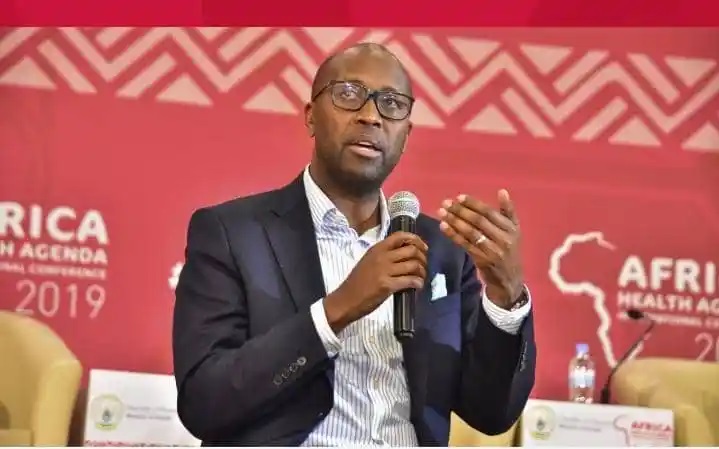
The Group Chief Executive Officer (GCEO) of Amref Health Africa, Dr Githinji Gitahi, has underscored the importance of making Africa’s health delivery systems more resilient, to be able to deal decisively with future pandemics. Dr Gitahi pointed out that the COVID-19 pandemic had exposed Africa’s health systems and so in the event of yet another pandemic, “Africa must have the right structures, it must have robust disease surveillance and laboratory systems to ensure that, “we have an adequate response that will protect lives and livelihoods.” According to the Amref Health Africa Group CEO, “the last two years have been difficult for Africa as the experiences of the loss of lives, loss of livelihoods readily come into sharp focus for Africans.” He wondered if Africa would be ready for a recurrence of happenings in the past two years. Amref Health Africa is Africa’s leading health Non-Governmental Organisation (NGO), working with communities in 35 countries to secure the right to health and break the cycle of poverty. Amref has teamed up with the Ministry of Health in Rwanda, the African Union and Africa Centres for Disease Control and Prevention (Africa CDC) to convene the fifth edition of the Africa Health Agenda International Conference (AHAIC) 2023 to be held in Kigali from March 5-8th. The conference is themed “Resilient Health Systems for Africa: Re-envisioning the Future Now”. Dr Gitahi who is a strong believer in Africa’s socio-economic development noted that Africa was far from ready should happenings in 2020 reoccur in future. “We have challenges with health financing, We do not have what it takes to respond to pandemics, we do not have the right structures, hence the need to engage health experts and researchers from Kenya and across the world for lasting solutions,” he stated. Dr Githati pointed out that climate change was affecting how disease patterns are going, noting that “we have more outbreaks on the continent than ever before, higher frequency, increased regularity.” Climate change is changing how diseases like malaria and other ailments spread and affect communities,“ so we have to reimagine the future health systems now.” He stressed the importance of the Africa Health Agenda International (AHAIC) in finding solutions to the teething challenges in Africa’s health Confirming Dr Githati’s submissions, the Global Preparedness Monitoring Board (GPMB), an independent monitoring and accountability body to ensure preparedness for global health crises has in a statement noted that the world is overshadowed by the risk of pandemics. The statement issued in Geneva on February 22, 2023, said “H5N1 is circulating widely in global animal populations, m-pox remains a public health emergency of international concern (PHEIC), outbreaks of Ebola have happened regularly, coronaviruses continue to pose a threat of spillover, and the COVID-19 pandemic is still causing devastation across the world. Yet worse may be in store. While we cannot tell the precise form that it will take, we do know that the next pandemic is coming.” Article first published on https://energynewsgh.com/africa-needs-resilient-health-systems-to-survive-pandemics-dr-gitahi/
Opinion: Rethinking global health funding for the good of all
By Githinji Gitahi, Camilla Knox-Pebbles The United Kingdom is no longer a development superpower — as demonstrated by its own action and admission. In 2020, it cut its aid budget from 0.7% of gross national income to 0.5%, which meant £4.5 billion less committed to supporting the world’s poorest people. Two further rounds of cuts to account for refugee hosting costs in the U.K., and reduced pledges for the Global Fund to Fight AIDS, Tuberculosis and Malaria and other global health initiatives further eroded its status. And the U.K. is not alone in this: overseas aid budgets of other high-income countries are following similar trends. This has a direct impact on the ability of global health funding initiatives and development organizations to deliver essential health services. Although African nations responded to the call to increase Global Fund pledges, they are faced with their own domestic health financing challenges. African governments continue to struggle to achieve the 15% allocation of their national budgets to health, as outlined by the 2001 Abuja Declaration. And even if they did, with low economic power and low tax efficiencies, this allocation would hardly be adequate. Rather than view it as charity, development assistance should be viewed as a strategic investment aimed at … the global good.— Between dwindling domestic budgets and reduced donor government funding, Africa’s $66 billion annual health funding gap is only set to widen. This means that many people living on the continent are losing their right to health — and their lives. Conflict, poverty, food insecurity, and climate change all act as barriers to closing the gap, yet a healthy Africa would contribute to a healthier world, as proven by the COVID-19 pandemic, which has shown how interlinked our health is across the globe. If we are to address that funding gap, we need to rethink global health and development financing. Stronger systems, structures, and policies The calls for increased and more targeted funding for key health programs in low- and middle-income countries are heartening. However, for global development funding to evolve and guarantee health security for all, we need stronger systems, structures, and policies that will optimize the collection and deployment of funds from donors and ensure funds are used for their intended purposes. In parallel, African governments must be intentional about domestic resource mobilization and resource allocation and utilization. Together, domestic policy reforms combined with donor financing reforms that empower poorer nations to strengthen their health systems can help break the cycle of dependency on development aid. All contribute, all benefit, and all decide Moreover, we require a shift in mindset that will change the way we perceive development financing. Rather than view it as a charity, development assistance should be viewed as a strategic investment aimed at addressing the biggest social, economic, and environmental challenges in low-, middle-, and high-income countries alike — for the global good. This idea, put forward by the Global Public Investment network launched at the United Nations General Assembly in September last year, aims to inspire the world to move away from the “old-fashioned aid mentality” toward a common framework based on the principles of “all contribute, all benefit, and all decide.” It’s a bold idea. Not just for its clear stance on the inability of current international finance mechanisms to meet the challenges of climate change, disease outbreaks, and conflict, but for its desire to uphold the ideals of equity and inclusion in global health and development — both of which have long been elusive for recipients of development assistance. Having lost over 6.8 million lives to the COVID-19 pandemic, we know all too well the cost of failing to invest in the right resources to protect the world before and during times of crisis. Knowing what we stand to lose should we fail to act, we must move with haste to restructure global health and development financing to fulfil the expectations of countries and to meet populations at their points of need. These conversations will be front and centre at the upcoming Africa Health Agenda International Conference on March 5-8 in Kigali. The conference is convened by Amref Health Africa, the Government of Rwanda, and the Africa Centres for Disease Control and Prevention, and it is a platform for us to rethink global health funding for the good of all. The views in this opinion piece do not necessarily reflect Devex’s editorial views. About the authors Githinji Gitahi Dr. Githinji Gitahi is the group chief executive officer of Amref Health Africa, the largest Africa-led international organization, reaching more than 11 million people each year through 150 health-focused projects across 35 countries. Previously, Dr. Githinji was vice president and Africa regional director for Smile Train International; managing director for Monitor Publications in Uganda; and general manager for marketing and circulation in East Africa for the Nation Media Group. Dr. Githinji also sits on the boards of the Africa Centres for Disease Control and Prevention and The Coalition for Epidemic Preparedness Innovations. Camilla Knox-Pebbles Camilla Knox-Peebles has been the chief executive of Amref Health Africa UK since 2019. She has 25 years of experience in the humanitarian and international development sectors. Prior to joining Amref, she worked for Oxfam where she led the organization’s disaster response and oversaw its work on water and sanitation, public health and resilience building. She is an expert in public health and food security and has a particular interest in the intersection between health and climate change Article first published on https://www.devex.com/news/sponsored/opinion-rethinking-global-health-funding-for-the-good-of-all-104999