
Youth-led digital transformation of health systems

CAROLINE MBINDYO, SAM MWANGI and ALICE KAMPENGELE FOR years now, the global technology community has touted Africa as the next frontier for growth, with tech hubs in Nairobi, Lagos, Cairo, and Cape Town attracting Silicon Valley investors and developing home-grown innovations. With a ready market for digital technologies created by the ubiquity of the mobile phone, investment in internet connectivity, and Africa’s young, educated and tech-savvy population, the continent should be championing digital transformation of health systems. Africa faces a formidable task in eradicating endemic diseases such as malaria, tuberculosis and HIV alongside the growing burden of non-communicable diseases on the continent, which is higher than the global average. With only 1.55 doctors per 1,000 people, according to World Health Organisation, digital health may offer most efficient means of scaling access to quality health services. While digital technologies are not a panacea for Africa’s relatively weak health systems, innovation in digital health can address high financial costs of delivering health care and increase the number of people in contact with the formal health system. These technologies may offer a more efficient approach to responding to challenges of overburdened health workers and high burden of disease on the continent. Technologies such as the internet of things and virtual care, for example, can bring doctors into patients’ homes, cutting transport costs, reducing the need for referrals to major hospitals and the number of consultations needed. Tele-health can also support self management of care so that patient care is not solely reliant on health professionals. E pharmacy would allow patients to receive their medications at home, cutting the need to travel to multiple pharmacies to fulfil prescriptions. This has been particularly beneficial for individuals in rural or remote areas who would otherwise have limited access to health care services. Data captured during these digital health transactions can be stored and shared across the health ecosystem, creating a continuum of care to enhance health outcomes. This can be achieved by improving medical diagnosis, data riven treatment decisions, digital therapeutics, self-management of care, as well as creating more evidence-based knowledge. These factors are especially critical on a continent where more people have access to mobile phones than to clean water and basic sanitation. Digital health is no longer about leveraging digital tools in the health sector, but how we can transform health services in a digital world. Young Africans are not just consumers of these innovations, but also creators. They bring with them a unique perspective and understanding of digital technologies and their potential to revolutionise the health care industry. From solar-powered hearing aids to cloud-based hospitals, to improving access to mental health in Africa, creative start-ups across the continent are developing disruptive digital health solutions. However, increasing innovation in digital health and creating a ready market for these innovations is dependent on our ability to leverage Africa’s youth demographic dividend and narrow the digital and financing divide. The narrowing of digital and financing divide is between urban and rural youth, and between African youth and their counterparts from high-income countries. Digital technology has the power to fundamentally change health outcomes of the continent’s population. With an estimated 70 percent of its 1.2 billion population under the age of 30, Africa’s youth present an enormous opportunity for the continent to lead the way in digital health innovations. They are hungry to participate in re imagining health in Africa as innovators, leaders, and adopters of technology. However, despite the wide access to mobile connectivity, 60 percent of African adolescents are not connected to the internet, compared to four percent of those in Europe. Allowing this digital divide to persist perpetuates inequities that bar those who lack digital skills or access to the internet from harnessing opportunities in health, education, commerce, and beyond. With so much at stake, African youth need to take a front seat in the digital transformation of the continent and use their bargaining power to advocate for more resilient health systems. Africa is home to seven of the world’s fastest-growing economies. This makes the region a fertile ground for innovative market based solutions. Youth-led digital transformation of health systems has potential to drive and deliver universal health coverage to Africa. Moreover, the involvement of youth in development of health technologies leads to their increased participation in the health sector, creating opportunities for growth and innovation. Yet, despite this promising outlook, health innovators in Africa face numerous challenges in getting their innovations to scale. Some analysis suggests that local innovators in Africa are less likely to be funded despite annual growth in venture capital investments on the continent. There is an urgent need for governments and other duty bearers to act and make funding and financing mechanisms accessible to young African innovators, to include not just capital, but also investments in infrastructure, human capital, and science and technology. There is also need to build the right regulatory environment for piloting innovations and develop conducive policies related to regional cooperation and ease of doing business. Such investment would also address inequalities in health to ensure a more inclusive approach to the design and delivery of health care – one that considers the heterogeneous nature of the population and offers care that is responsive to the needs of communities and individuals. It is estimated that in just seven years, 40 percent of the world’s youth will be in Africa. Imagine what we could achieve if we empowered them to lead the continent’s digital health transformation. Conversations on driving youth led digital transformations in Africa will be front and centre at the Africa Health Agenda International Conference, which will take place from March 5 to 8 in Kigali, Rwanda. The authors are Caroline Mbindyo, Amref Health Innovations CEO; Sam Mwangi, Amref Health Africa head of digital transformation; and Alice Kampengele, Amref Health (Zambia) programme
Climate Change to Take Centre Stage at Africa Health Agenda International Conference (AHAIC) in March 2023
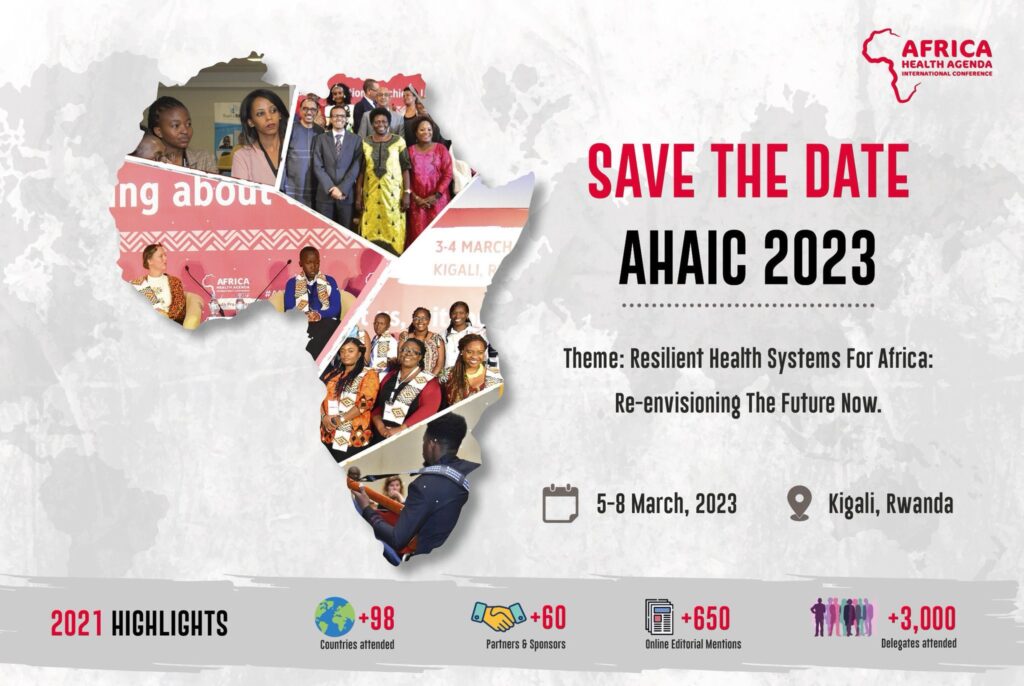
Political leaders, policy makers, civil society, health, and climate leaders convene in Kigali, Rwanda, to discuss health policies for Africa against backdrop of global challenges, including climate change, food insecurity, conflict and economic recession. 7th February 2023, Nairobi, Kenya: Stakeholders in health and development from all over the world will, from 5-8 March, assemble in Kigali, Rwanda, for the fifth edition of The Africa Health Agenda International Conference (AHAIC) 2023, whose theme is “Resilient Health Systems for Africa: Re-envisioning the Future Now”. Jointly convened by Amref Health Africa, Ministry of Health Rwanda, African Union and Africa Centres for Disease Control and Prevention (Africa CDC), the biennial conference will bring together the continent’s top thought leaders, political figures, innovators, researchers, policy makers and civil society for dialogue and action aimed at mainstreaming climate discourse into health policy conversations and vice versa. “This will be the first time that a global health conference in Africa focuses on climate change as a key determinant of health. We know that climate change and health are intrinsically intertwined, yet they have for decades now been treated as two separate issues,” said Dr Githinji Gitahi, Group CEO, Amref Health Africa. “At AHAIC 2023, we will be exploring themes at the nexus of climate change and health including a rapidly warming planet, pandemic preparedness, food security and nutrition, innovation, research and development, gender, and conflict.” AHAIC 2023 comes against the backdrop of renewed calls by African leaders for more urgent action against climate change as its impacts continue to be acutely felt on the continent. At the heart of the conference will be sessions curated to find sustainable and inclusive solutions to Africa’s most pressing climate change and health challenges. “African nations remain particularly vulnerable to the effects of climate change. We are already feeling the effects of deteriorating global health through extreme weather events and food insecurity, limited access to clean water, and frequent epidemics. Yet these issues remain on the periphery of climate conversations despite the existence of scientific evidence that climate change threatens our well-being,” said Dr Sabin Nsanzimana, Minister of Health, Rwanda. As the world inches closer to the 2030 Sustainable Development Goals deadline, African leaders at the conference will be urging the global community to renew its commitments to end poverty and improve health and wellbeing while at the same time protecting the planet. With a youthful population of 1.2 billion people likely to bear the brunt of climate change, participants at the conference will also be advocating for more resources to be allocated to resolving the global health and climate crises as the world slowly emerges from the three-year grip of the COVID-19 pandemic. “While we remain cautiously optimistic about the world’s ability to prevent and withstand the next global pandemic, we must also be cognisant that we cannot survive what we do not prepare for. It is, therefore, imperative that we come together to find solutions to today’s and tomorrow’s challenges while we still have the opportunity. Together with Member States and partners such as Amref, the Africa CDC will continue to implement the New Public Health Order to drive Africa’s health security,” said Dr Ahmed Ogwell Ouma, Acting Director General, Africa CDC. AHAIC 2023 aims to shape a joint African position on climate and health ahead of critical conversations that will take place at the World Health Assembly, the 78th session of the United Nations General Assembly (UNGA 78), and the 28th session of the Conference of the Parties (COP 28) later in the year. The conference will kick off with the AHAIC 2023 Wogging event on 5th March to coincide with the Kigali Car Free Day, which takes place every first and third Sunday of the month as part of efforts to make Kigali a green city and to fight non-communicable diseases (NCDs). This will be followed by three days of plenaries, high level meetings, workshops and networking sessions that will take place from 6th to 8th March. ### Notes to Editors: About AHAIC The Africa Health Agenda International Conference (AHAIC) is a flagship convening of Amref Health Africa and is the largest health and development conference held in Africa every two years. Now in its fifth round, AHAIC 2023 will bring together the African community, world leaders, financiers, innovators, technologists, scientists, and experts across domains to discuss health policies for Africa in response to the most pressing challenges of our times – conflict, climate change, food insecurity and human rights violations. AHAIC 2023 puts people at the centre of all discussions and recognises the unique needs of the global south. We encourage minority populations, African nations and other low- and middle-income countries to get involved in re-shaping Africa’s health and development trajectory. Run by and for the people of Africa in Africa, AHAIC 2023 is designed to tackle complex issues in a practical manner and promises to be more challenging, innovative, and fun than other global health events. Additional Resources: To learn more about AHAIC 2023, please visit www.ahaic.org. You can also view the conference programme online at: https://ahaic.org/conference-programme/ Get real-time updates from the conference by following Amref Health Africa on Twitter | LinkedIn | Facebook | Instagram and via #AHAIC2023. Media Contacts: Erick Achola, Global Communications Manager, Amref Health Africa Erick.Achola@Amref.org Julien Niyingabira Mahoro, Rwanda Biomedical Centre/Ministry of Health Rwanda niyingabira@gmail.com or Magnifique Muhoza (Office of the Government Spokesperson) mmuhoza@ogs.gov.rw Liliane Bilogho Ndong Nang, Technical Officer Risk Communication and Community Engagement, Africa CDC Nangl@africa-union.org